
Choosing a deck color is easier when you look at the whole house, not just a small sample board. Siding, trim, roof, railings, and the amount of sun all change how a color reads. For homeowners in Bismarck, Mandan, and nearby North Dakota communities, here is a practical way to narrow the options before ordering decking.

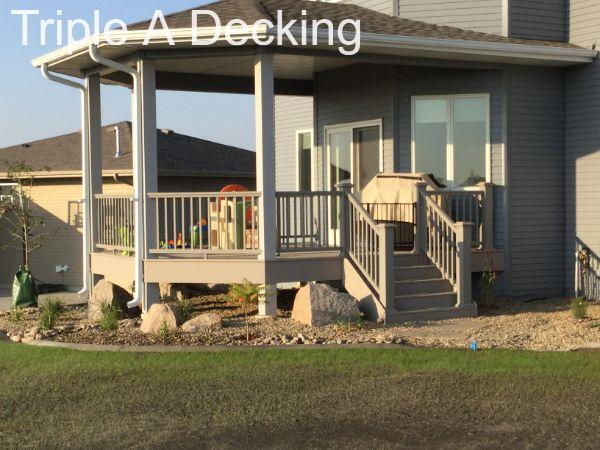
Start with the colors your house already has
Stand back and identify the house’s main siding color, trim, roof, stone or brick, and permanent features. Decide whether those colors feel mostly warm (cream, tan, red-brown) or cool (blue-gray, charcoal, crisp white). The deck does not need to match the siding exactly. It should look deliberate beside it.
A warm brown or muted tan can complement cream siding and warm brick. Cooler gray or charcoal boards may suit blue-gray siding and black trim. A midtone wood look can bridge mixed materials. These are starting points, not rules: actual samples are more useful than a color name on a screen.
Choose contrast with a purpose
Matching the house too closely can make the deck disappear; strong contrast can make it the focal point. If the siding is light, a medium-toned deck often grounds the outdoor space. If the house is dark, a lighter or varied board can keep the deck from feeling heavy. Consider the view from inside as well as from the yard.
Railing changes the result. Black aluminum can frame the view, white composite can echo light trim, and a contrasting top rail can tie a deck border to the house. See our deck railing ideas for more combinations.
Test full-size boards at your house
View actual boards next to the siding at the door and farther out in the yard. Look in morning light, direct afternoon sun, and shade. Wet a sample if the manufacturer permits, and check how its grain and color variation look alongside the house. A tiny online swatch cannot show the scale of a finished deck.
Bring railing and fascia samples into the comparison. If you are choosing a picture-frame border, place both colors together. Pay attention to the underside and exposed edges on a raised deck, too.
Think about heat, snow, and upkeep
Darker decking can feel hotter in direct sun, though the result varies with product, color, and exposure. A shaded north-side deck may favor a different choice from an unshaded south-side deck. In winter, the house, railings, and snow create a different palette again. Look for a color you like in every season rather than one that looks perfect in a single photograph.
Material matters as much as color. Composite and PVC lines differ in texture, color variation, cleaning instructions, and warranty coverage. Ask to compare the exact product lines you are considering. Our composite decking guide explains some of those trade-offs.
Three combinations to try
- Light siding and dark trim: a medium walnut or weathered-brown deck with black railings can connect the two without repeating either color exactly.
- Warm brick or tan siding: a natural brown or muted taupe deck can pick up the home’s warmth; test a darker border if you want definition.
- Cool gray siding: compare both warm wood-look boards and cooler grays outdoors. A warmer board may add contrast while a gray board can create a quieter, coordinated look.
These are design examples, not claims about a specific Triple A project or a guarantee that a given product will match your home.
A simple decision checklist
- Photograph the house in daylight, including siding, trim, roof, and landscaping.
- Pick two or three board colors in the product line you actually plan to use.
- Place full-size samples at the house and view them from several distances and times of day.
- Compare the railing, fascia, and border together with the main deck board.
- Confirm availability, installation requirements, maintenance, and the specific product warranty before ordering.
Plan the finished deck with Triple A Decking
We can help you compare material and color options in the context of your house and deck layout. Explore our deck design service, or contact Triple A Decking to talk through a project in the Bismarck–Mandan area. Bring photos of your home and any board colors you already like.